Woodland Culture in Augusta County
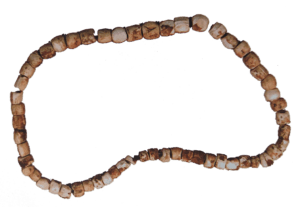
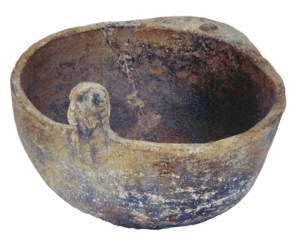
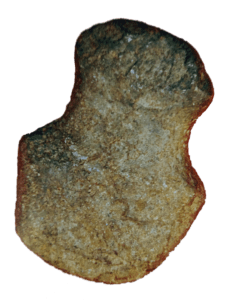
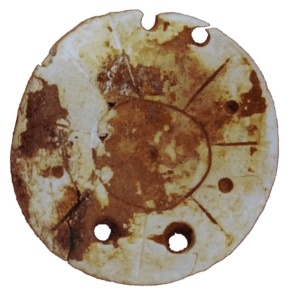
(All of the artifact shown are from the Woodland Culture and were found in Augusta County, VA)
During the Archaic period the Native Americans developed a culture that included small groups living for periods of time in one location. As the Woodland Period developed so did the forming of these cultural groups.
These, often small, groups soon expanded culturally and they settled geographically into what became known as tribes that lived in defined locations.
Virginia was inhabited by Native Americans from four nations. Each group spoke a different language and lived in different ways.
The language groups were the Algonquian, Iroquoian, Mingo and Siouan nations. Many Native American sub-groups developed.
Augusta County was a hunting ground for many different groups and some lived in the Augusta County area at least temporarily, especially the Native Americans from the Mingo Culture.
With the development of the Woodland Native American Culture came new patterns of behavior.
Archaeologist distinguish the developed Woodland Period from the preceding Archaic Period by five key characteristics:
Widespread practice of agriculture (including corn and tobacco)
- Use of burial mounds
- Pottery replacing soapstone bowls
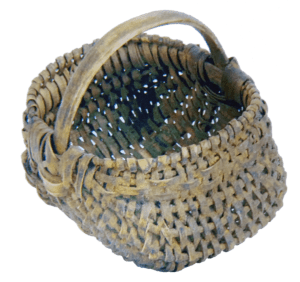
- Artistic basket making
- New types of dwellings
Agriculture supplemented their hunting and gathering practices.
These people lived, hunted, fished, and farmed in sedentary communities. They used pottery and stone wear to facilitate the cooking of food. Cooking occurred both in and above the fire. Woodland people became a family culture and prior to 1700 these families lived in Augusta County which resulted in mound burial grounds.
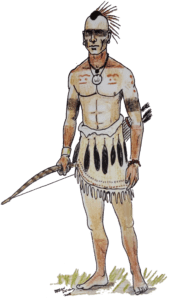
The bow-and-arrow (with smaller stone points that can legitimately be called “arrowheads”) replaced the spear and atl – atl (throwing sticks) of the Archaic period.
Augusta County with it’s fertile land was appealing to the Native Americans. The Ice Age had left Augusta County with large rivers such as the New, Shenandoah, Cow Pasture, Jackson, and the James.
All of these large rivers had numerous tributaries. Many smaller rivers were the tributaries to these larger rivers. This network of rivers and streams served as an important source of water for Native American families as they lived and grew crops in this fertile land of Augusta County.
There were Native American settlements along all of these rivers and many of their tributaries.
In each of these settlements there were similarities in culture, but also there were notable differences in housing and artifacts. The people from the Woodland Culture used what they found in nature for shelter and food.
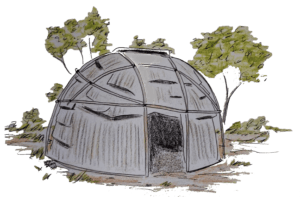
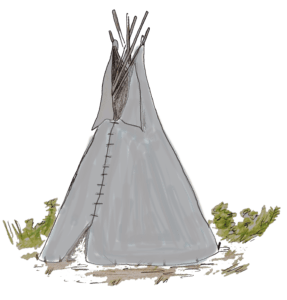
During the late Woodland Period, Native Americans lived in long-houses or in wigwams, while others lived in tepees. The long-house is a long building constructed with young trees that were shaped and covered with grass, tree bark, or animal skins. The number of families living in the same structure depended on the size of the structure. Often many families lived in one long-house; in other cases the structure was for a single family.
The wigwam was a part of the Woodland Culture in Augusta County, Virginia. The construction of a wigwam is very similar to that of the long-house, except it is smaller to provide additional privacy.
Often the wigwam and the long-house were found in the same village as documented by early artists sketches.
Popular among the Woodland cultures in Piedmont and in western Virginia, was the tepee. Perhaps this is because these cultures enjoyed following the migration of animals.
These cultures left no written records however through archaeological study it was found that they preferred the same locations as the settlers that arrived later from Europe. This included the river bottoms where crops could be grown on flat, fertile ground.
In the Woodland Culture, a chief was selected and delegated power that was fostered by a religious ceremony. Burial was a religious ceremonial occasion that included burial in caves or mounds; most often accompanied by personal artifacts.
The late Woodland people were sophisticated craftsmen that created a wide range of pottery forms, stone artifacts, baskets, netting, and bone tools such as awls, fishhooks, needles, beamers, and turtle shell cups.
The resourceful Native Americans traded with the white traders for personal treasures. Imported beads and pendants of metal were very desirable. Others made their own personal items such as tomahawks, pendants, or other symbolic or ceremonial objects of stone, copper, and shell. Examples of these personal treasuries are often found at Native American sites in Augusta County.
A wide range of rather elaborate burial customs reflected the people’s fascination with the passage from life to death.
Farming became a way of life for small groups of Native Americans in Augusta Co. Beans arrived from the southwestern lands about 1,000 AD. Beans were a needed addition to the corn and squash food crops. Small crops of tobacco came to Augusta County. Animals, especially deer and turkey, were harvested, as well as turtles, bear, bison, and elk.
A wide array of natural plants, nuts, and berries were gathered during the Native American Woodland Culture.
Because the preservation of artifacts from the late Woodland Period is outstanding, archaeologists have been able to collect much information about group variation in Augusta County and across Virginia.
Page Developed by Gordon Barlow gordon@amaty.com