Jesuits Visit Augusta County, Virginia
Jesuit Settlement in Virginia (1570 – 1572) 22, 23, 24During the 16th century, France, Spain, and England sponsored exploration of the Atlantic Coast of America. Spain was the most successful having established strong settlements in the Caribbean Sea and the Territory of Florida. From Spain’s prospective Florida reached northward along the entire Atlantic Coast.
Spanish captains charted the islands and waters of the Chesapeake Bay, which the Spanish called St. Mary’s Bay.
In 1564, General P. Menendez, a Spanish sea captain sailed into the Chesapeake Bay. As was the custom of the day, he captured a young Native American boy named Kecoughtan, which he took to Spain on his return trip. The Governor of Spain named the boy Don Luis.
For the next five years, Don Luis lived with the Jesuit Fathers, who soon converted him to Christianity. The last two of those five years Don Luis spent in Florida with the Jesuit Fathers. He educated the Jesuit Fathers about his homeland which became known as the Land of Don Luis.
In 1569, the Spanish Government sponsored a Jesuit expedition named, Ajacan to the Land of Don Luis. The Spanish purpose was temporal as they looked for a direct water route to the Far East and a settlement of new land. For the Jesuit Fathers the purpose was spiritual. General Menendez, Don Luis, and the Jesuit Fathers Sequra, Quiros, Solis, Mendez, Gomez, Zaballos, Linares and Redondo planned a mission to the Native American Land of Don Luis.
The Fathers took along a young lad named Alonzo. Don Luis accompanied the Fathers as they departed for Virginia on December 10, 1569.
The Jesuit Mission expedition arrived in the Land of Don Luis (Chesapeake Bay Region), in early 1570. Guided by Don Luis, the Fathers selected a site suitable for mass on the river (James River). Aboard ship they had food, trade items, boards, nails, tools, religious gifts, and items needed for holding mass. They set out to build a house made of timber and a thatched roof with an earth floor for mass and another for living quarters.
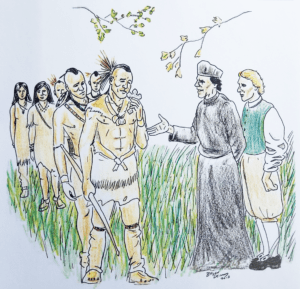
Don Luis introduced the Fathers and Alonzo to the Native Americans including Powhatan’s father. The Fathers soon learned that there was a shortage of food as there had been little rain for many moons. With the help of Don Luis, the Fathers introduced Christianity to the Native Americans.
The Jesuit Fathers held regular mass. They preached a spiritual message and baptized the Native Americans. Their spiritual messages were consistent with their European beliefs. One of those messages focused on polygamy as a sin. In America the Native Americans celebrated the right to practice polygamy as a right associated with leadership. While traveling with the Jesuit Fathers, Don Luis was not in a position to practice polygamy.
After returning to America and being reinstated as a leader, Don Luis was confronted with the opportunity to practice polygamy. He found polygamy enticing. The Jesuit Fathers learned of Don Luis’s persistent involvement in polygamy. They believed that Don Luis had abandoned the Gentile, thus they scolded him. They pushed Don Luis to a breaking point.
On November 21, 1571, the Native Americans massacred the Jesuit Fathers. Don Luis was the chief perpetrator. He and his brothers used their arrows to commit the actual martyrdom. Only the young boy, Alonzo, was spared and he was taken by Don Luis to live among the Native Americans.
Don Luis and his brothers buried the Jesuit Fathers and then gathered their belongings that included cassocks, chasubles, linen alter cloth, and clothes. They opened the locked chests filled with gifts, trade items, sacred crosses, rings, necklaces, and silver crucifixes. Many of these religious items were tossed aside.
In 1572, a supply ship came to America where more than thirty well-armed Spanish soldiers came ashore on the river site. They learned of the massacre of the Jesuit Fathers from Alonzo.
Being familiar with ways of the Spanish, Don Luis recognized the need to free Alonzo to the Spanish to avoid confrontation, thus receiving supplies and trade goods. Once Alonzo was with the Spanish, they departed. It is because of Alonzo’s accounts that, today, we have translated Spanish documents that provide an exact account of the events about the Land of Don Luis (what is now Tidewater Virginia).
The debate about Jesuit Missionaries visiting in Augusta County is ongoing. There is evidence to support the conclusion that the Jesuit Missionaries did visit Augusta County.
Early explorers of the Appalachian Mountain, mentioned having met Jesuit missionaries that had crossed the mountain. Based on Champlain’s Map of 1632, Jesuit Missionaries from New York came up the Valley of Virginia (present day Shenandoah Valley) through present day Frederick and Shenandoah counties, and into present day Augusta County.
In 1669, Virginia Governor Berkley commissioned John Lederer, a Jesuit, to explore the region west of the range of mountains (Blue Ridge Mountains).
Based on Lederer’s 1669 map, published in Paris by Governor Talbot of Maryland in 1672, and transcripts of John Lederer’s notes (in the possession of Gene Hammond, author of Unmasking a Virginia Myth) John Lederer descended the Blue Ridge Mountains and crossed the Shenandoah Valley to a place the Native Americans called, Goshen Pass.
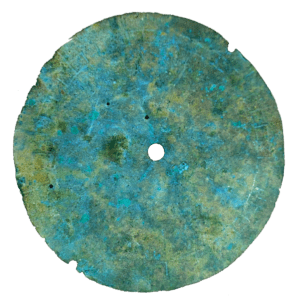
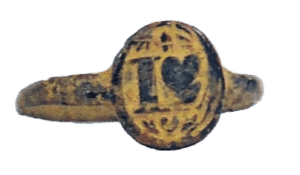
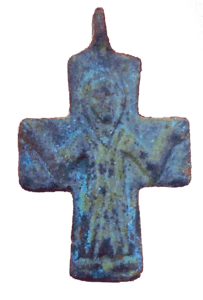
Perhaps even more significant is an artifact associated with the Jesuit culture that were found in Augusta County. The evidence we have suggests that the Jesuit missionaries visited in Virginia was short lived. Regardless, their teaching had a lasting effect on the Native Americans.
It is possible that the Jesuit teachings about compassion may well have contributed to the lives of early settlers being spared, with many being taken into captivity rather than massacred.
Page developed by Gordon Barlow gordon@amaty.com