
Archaic Culture in Augusta County, VA
The Archaic Native Americans were the second culture of humans to inhabit Augusta County, Virginia. This period is known as the Pre-Columbian Period. The Archaic Native Americans were a sedentary culture at times.
Often they roamed the land following animal migration, or they migrated to the ocean and rivers in search of waterfowl and shell fish. The Archaic people were the first people to cultivate foods.
Basketry and netting augmented the collection of plant foods, while the use of grinding stones made seeds readily edible. The Archaic Period in Augusta County from 8,000 BC to 2,000 BC experienced a warming trend as the Ice Age to the north disappeared.
Early in the Archaic Period, large mammals had disappeared from Augusta County; this probably resulted in the change in habitat and excessive hunting.
Fossilized bones from large mammals have been found in 18th century Augusta County. (Mammal skeletons were excavated at Saltville, Virginia which was a part of Augusta County known as the Wilderness District. (You will want to visit the Saltville Museum in Saltville, Virginia)
The habitat in Augusta County during the Archaic Period is believed to have had green plants to attract smaller animals.
During the Archaic Period, hunters spent time in river bottoms as they focused on the land that produced smaller mammals such as deer, bear, and beaver. The focus on hunting small game allowed the Archaic Native Americans to develop new styles of points. Fluting found on the Clovis point during the Paleo period was gone, and the non-fluted point was the result in a change in hunting strategy.
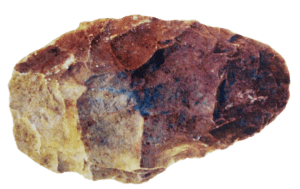
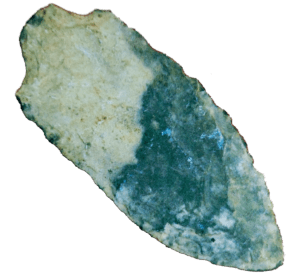
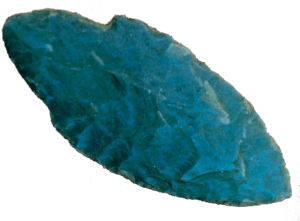
The way Archaic points were notched and flaked were distinctive to the period. These Archaic points were notched differently. These points help define their culture and provide meaningful artifacts that help archaeologists identify their family units. In fact, the end of the Paleo Period is defined by a shift in the design of points.
The new point designs reflected the development of an artistic culture as they changed to small game hunting.
The Archaic people abandoned the nomadic culture of the Paleo Culture and became a semi-stationary culture that occupied settlements along strategic streams and rivers, thus completed fewer long trips.
The Archaic Culture was resourceful and handy. They developed a new way of hunting and used stoneware to prepare edible food.
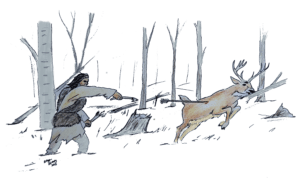
The Archaic people developed the atl – atl which was an enhanced way of throwing a spear. Once the technique was mastered, it was an accurate and very powerful tool for hunting.
During the Archaic Period the Native American developed a sense of ownership. They recognized the value of protective shelters and good hunting ground. They gathered seafood and berries.
The Archaic people defined and defended their territory.
Independence and isolation led to the design of individual styles of points and tools which are now easily identifiable.
Artifacts collected from known Archaic cultural sites in Augusta County suggest that there was the possibility of trade. The fact that items made from shell have been found in grave sites far away from the ocean, that date to the Archaic Period, suggests that trade among different Native American groups did occur.
Several Archaic sites have been identified in Augusta County. The cultural advances made during the Archaic Period were significant and helped define the culture of the Woodland Period.
Page developed by Gordon Barlow gordon@amaty.com