Loyal Company in Augusta County, VA
In 1748, a second group of influential Virginians formed the Loyal Company of Virginia. The founders included John Lewis, Thomas Walker, Joshua Fry, Peter Jefferson, John Meriwether, Charles Lewis, James Power, Charles Dick, Charles Barrett, Thomas Turpin, John Harvie, Thomas Meriwether, Thomas Meriwether, Jr., John Baylor, Samuel Waddy, Robert Barrett, Henry Willis, Peachy Gilmer, James Maury, Thomas Lewis, Peter Hedgman, John Moore, Robert Martin, Henry Tate, Richard Jones, William Wood, Samuel Dalton, Francis Thornton, Francis Thornton, Jr., Nicholas Meriwether, William Hudson, Francis Meriwether, Humphrey Hill, John Dixon, and Edmund Pendleton.
In July 1748, the Virginia Council, which was the executive body of the House of Burgesses, awarded a grant of 800,000 acres of land in southwestern Augusta County to the Loyal Company of Virginia.
The land had a northern border of the Ohio River and was west of the Appalachian Mountains. It reached all the way to Virginia’s unknown western border.
John Lewis, Joshua Fry, and Peter Jefferson became the managing partners of the Loyal Company Land Grant. Unlike the Ohio Company Land Grant and other Augusta County Land Grants, the Loyal Company Land Grant, due to influence from the managing partners, was not required to complete settlement of the land. Instead the Loyal Company of Virginia was only required to file surveys of the land with the Virginia Secretary of the Colony within four years.
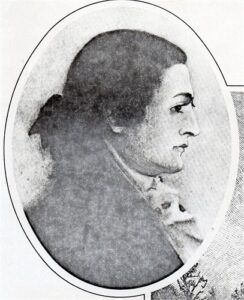
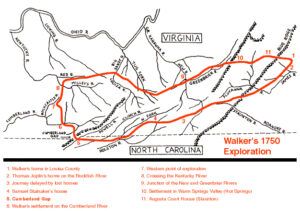
John Lewis of Staunton, Virginia assumed managerial duties of the Loyal Company of Virginia. Dr.Thomas Walker of Albemarle County, VA was appointed the Agent of Exploration. Soon after his appointment, Walker, in 1750, led an expedition of men to explore the interior of their land grant. Peter Jefferson would oversee the survey work.
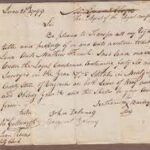
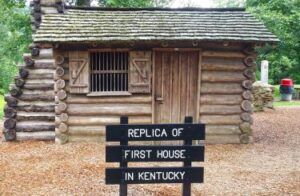
Thomas Walker kept a journal of his exploration, noting that he built a log structure on land near present day Barbourville, KY, thus claiming the land for the Loyal Company of Virginia.
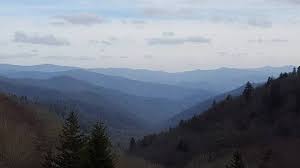
The explorations of Walker and his men did much to open the western lands of Kaintuck (Kentucky) to settlement. The Cumberland Gap became the great highway for the westward movement. Within a few years, tens of thousands of settlers would pass through the Cumberland Gap on their way to the rich lands of “Kaintuck” (Kentucky).
Thomas Walker was a surveyor and did much to define land patents for settlers coming to Augusta County. By 1750, on the dawn of the French and Indian War, Augusta County was experiencing an increase in the migration of families in search of land. Settlers were coming to Augusta County from Pennsylvania, Maryland, Eastern Virginia. and Europe.
Migration to Augusta County from Eastern Virginia was through Wood’s Gap which crosses the present-day Skyline Drive (west of Crozet). This influx of settlers into Augusta County was due in part to the efforts of John Lewis and Dr. Thomas Walker, who aggressively went about locating, surveying, and selling land patents to settlers. On behalf of the Loyal Company, they sent out advertisements throughout the British colonies inviting settlers to come and settle on their own land.
The Loyal Company offered an installment purchase plan for the purchase of a land patent that included a surveyed plot of land at the rate of £3 per hundred acres which included surveyors’ fees and patent fee. The Loyal Company retained title until paid as security for the loan.
Kentucky was never a territory; it remained a part of Virginia until it was granted statehood in 1792. The Loyal Company and its founders (or their estates) continued to sell land even after Kentucky became a state. Land Grants were good for Augusta County as the land speculators worked to increase settlement in what had been unsettled land.
Page developed by Gordon Barlow gordon@amaty.com