


English Colony in Virginia
The roots of Augusta County are closely tied to Virginia’s first English settlement at Jamestown. As history unfolded the search for new land, that initially brought about the exploration of America, continued to Augusta County as land speculation was paramount.
In 1606, King James I granted a charter to the Virginia Company, to form a settlement in North America called Virginia that was named for Elizabeth I, the “virgin queen.” The Virginia Company came to search for gold and silver deposits in the New World, as well as a river route to the Pacific Ocean that would allow them to establish trade with the Orient.
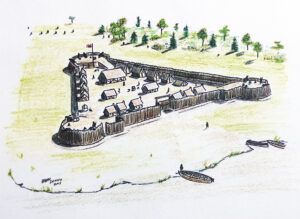
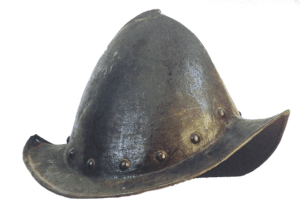
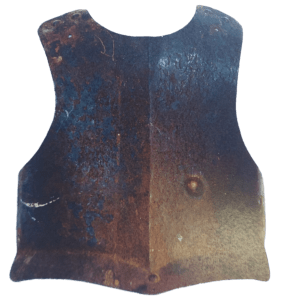
On May 14, 1607, a group of settlers landed on the banks of the James River and founded the first permanent English settlement in North America. They named the settlement Fort James. The new settlement initially consisted of a wooden fort built in a triangle around a storehouse for weapons and other supplies, a church, and a number of houses.
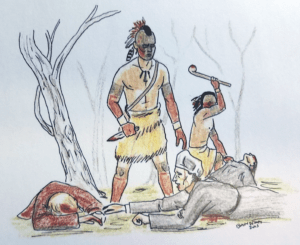
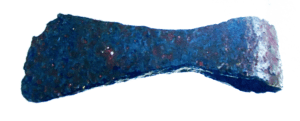
Famine, disease, and conflict with local Native American tribes in the first two years brought Fort James (Jamestown) to the brink of failure. There were the constant attacks by the Algonquian tribes that had been organized into a Confederacy under Chief Powhatan. John Smith and Chief Powhatan reached a, much needed, agreement to establish trade with Powhatan’s tribe by early 1608. This friendship was an essential element in the survival of the colonists. Native Americans traded corn for metal tools, and other objects from the English. Without corn the settlers would not have survived.
Events such as the marriage of Pocahontas to John Rolfe improved the relations between the Native Americans and the colonists. However, Chief Opechancanough (Powhatan’s brother) had a different view of the white man and recognized that as the colonial English settlements across Virginia continued to expand, the land that once belonged to Native American tribes was now being claimed by the colonists.
Chief Powhatan and his Native Americans tribesmen spoke of the land beyond the great mountains. Even in the 17th century colonists were intrigued by the possibility of owning land beyond the great mountains in present day Augusta County.
Page developed by Gordon Barlow gordon@amaty.com