Earthen Mound Burial in Augusta County, VA 15, 16, 17
Earthen Mound Burial Culture was practiced in Augusta County. These hallowed and often definitive grave sites usually contained the remains of many Native Americans (women, men and children).
The dead were buried below ground, much as we do today, except the graves included many bodies. Then graves were covered by hand with dirt and stone to form large earthen burial mounds. Some included tunnels that allowed more people to be buried in what was probably an open pit area until closed.
Earthen Burial Mounds would increase in size over time as more and more bodies would be added. Even the dimension increased in size often encompassing many acres of what became sacred land.
Earthen Burial Mounds have been found in Augusta County. Perhaps the most well-known burial mound is located on the East Farm located along Middle River near Churchville, VA. This mound was excavated by the Smithsonian in the 1970’s. A large un-excavated mound lies on a knoll above Buffalo Branch. This mound has remained in place because the site is above the flood level of Buffalo Branch.
The East Farm’s Native American Burial Mound is located to the west of Middle River just south of Route 250 in Augusta County (this area is known as “Vinegar Hill” and is visible when heading west on Route 250, to the left just after crossing the Middle River).
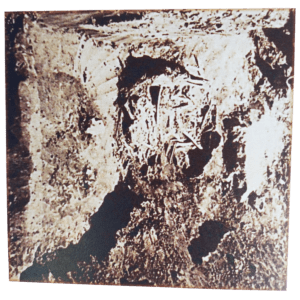
The Archaeological Society of Virginia completed it’s final dig of the East Farm Burial Mound in 1965. It is believed that the Mound was about 45’ wide x 55’ long. The mound was excavated many times prior to 1965 by amateurs.
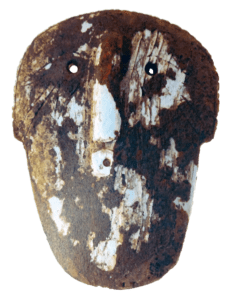
The 1965 dig found over 140 skeletons and many fine Native American artifacts. The entire site was estimated to have included as many as 300 Native American burials.
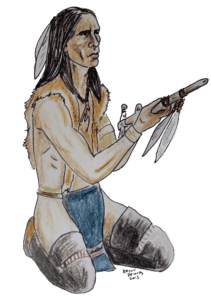
The late Woodland people achieved cultural richness. Ceremonial and symbolic objects made of clay, stone, and shells were handcrafted in large numbers. Native Americans from the Woodland Culture practiced ceremonial events, and often participated in a ritual culture. Elaborate burial customs reflected the people’s fascination with the passage from life to death. Villages became more complex and buildings more substantial.
In a typical village, various sizes of long-houses were placed in rows around a plaza with a council house or temple elevated on a nearby mound. A palisade (wall) may have surrounded the entire village. (An excellent example of such a village has been uncovered near the Jackson River) The Woodland Native American culture was very sedentary, and much more focused on the family with growing crops, hunting, and a variety of handcrafted goods providing the essentials for a communal lifestyle.
There were hostile Native Americans that saw the occupation of their land by settlers as a threat, and therefore challenged that movement with hostile acts. These acts did not subside in eastern Augusta County until after the French and Indian War. Peace did not come to Western Augusta County until much later. Native Americans inhabited eastern Augusta County well into the nineteenth century.
Page developed by Gordon Barlow gordon@amaty.com